It is often believed that India is the most superstitious state all over the world However, this isn’t real, because there are numerous other countries which are as or greater superstitious as India. While we’re not here to discuss those other nations of the world today, but we’re here to find out what superstitions are prevalent in the Indian culture that people are prone to believe in India. There are many are ones you’ve heard before but a few may be completely new to you, particularly for foreigners who are visiting India. Let’s go through our list of Top 10 Most Common Superstitions in India in the past, and we’ll get on the list immediately.
Top 10 Common Superstitions in India
1. Black Cat Crossing Your Path Is Bad Luck
This is one of the most commonly believed to be superstitions in India for instance when you spot the black cat crossing your path or on your path, you’ll need to wait for someone who’s going in the same direction so that luck will not strike you. or something similar! If you’re a non-native there are times when you’ll witness people stopping and waiting to be waited upon when something similar to such happens. It’s not only a matter of black cats in fact If a cat walks across the road, many people would stop and linger for a while.
There are a myriad of theories concerning the reasons this belief was created Some believe that it has roots in ancient Egypt and the time when black cats were believed to be believed to be connected to witchcraft. Others believe that it’s real due to the fact that there were numerous big cats, also known as the tigers in India and, should there is a tiger in your path and you are in the vicinity, it’s highly likely to be able to attack your from behind. This is why it’s linked to that too.
2. Lemon and Chilies Keep Evil Away
Whatever it is, an apartment, a shop or a different construction, you’ve likely witnessed a lot of people hanging lemons and chillies in front of the entrance isn’t it? What’s up with that? What does it mean? It’s an extremely common belief in which people believe using this method actually helps keep people from the “evil eye” or the general negative vibes out of an area. There is a belief that, in the past it was a method to ward off bugs because lemons contain citric acid, and chillies contain capsaicin. But now, this entire thing has turned into an unofficial superstition.
3. No Cutting Nails or Hair After Sunset
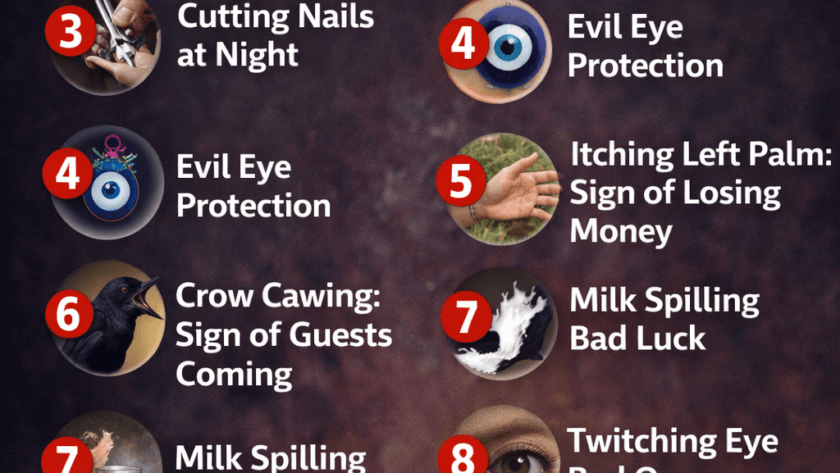
In India the majority of people don’t cut their nails or hair after sunset, which is simply to protect themselves from unfortunate luck. This is akin to an old tradition when people didn’t have electricity therefore cutting nails and hair could be dangerous with sharp blades for instance. It’s just that!
4. Don’t Sweep the Floor After Dark
Here in India cleaning the floor is strictly a morning activity, and you’d never see anyone sweep the floor when it’s dark outside. Why? It is believed that a similar act could ward off Goddess Lakshmi and is an opportunity to create more financial problems to households. There is also an logical basis for this as, prior to the advent of lighting with electricity, walking in the dark can result in losing small amounts of valuables, like jewelry or coins.
5. Peepal Trees Are Haunted at Night
If you’re from India and you’re aware of it, somehow peepal trees are associated to ghosts, particularly at evening. It also has certain scientific and logical banking too, for instance in the evening the peepal tree releases lots of CO2 and should you happen to be sleeping beneath the tree, it could be hazardous or even fatal.
6. Eclipses Are Super Inauspicious
This one, as you will notice, is tightly linked to Hindu mythology and there is no rational or scientific reason for this. As such, it is believed in India in such a way that people begin abstaining from eating meals, cooking and going outside, particularly pregnant women. It’s not just the solar eclipses. People also observe these rules when lunar eclipses occur as well.
7. No Temple Visits During Menstruation
This next one is a hotly debated subject in reality, because there’s this notion that women who are on their menstrual cycle shouldn’t or shouldn’t visit temples due to being considered “impure.” Again, there’s no rational explanation to support this belief, but it may have been a means to allow women time off rather than perform lengthy temple ceremonies.
8. Eye Twitching Tells the Future
In India there is a belief among the Indian population that if their eyes are blinking, it indicates something, such as it’s going to take place. For instance, if the right side of your eye twitching it could be an indication of luck or a good thing will happen to you. But what happens if it’s an eye on the left? It’s a good thing, because, according to this superstition or belief it’s a big problem since it’s a sign of bad luck. However, there’s an abundance of things that could make your eyes turn red and this is why there’s no explanation for this particular one.
9. Horseshoe on the Door Brings Luck
When construction begins on a new structure in India it is a tradition to place an iron horseshoe on the front of the building. This is usually shops and homes. It’s seen as a symbol of luck and keeps evil spirits out. Although, it’s not a religion that was first developed in India but it was an Western custom that found the journey to India somehow.
10. Bathing After a Funeral
Everybody in India has faith in this mythology because they believe that it cleanses negative energy and prevents bad luck from infiltrating the home after you’ve been to the Shamshan or the cremation site. If you take a take a look there’s a solid reason for it. For instance the time when these grounds for cremation weren’t considered to be clean and washing off after a funeral sounds to be an ideal idea.
Conclusion
Here’s the truth. Like that, there are hundreds of superstitions that are believed to be true in India but of them these are the most popular ones that you’ll come across people believe in virtually everywhere in the nation. So, that’s that!