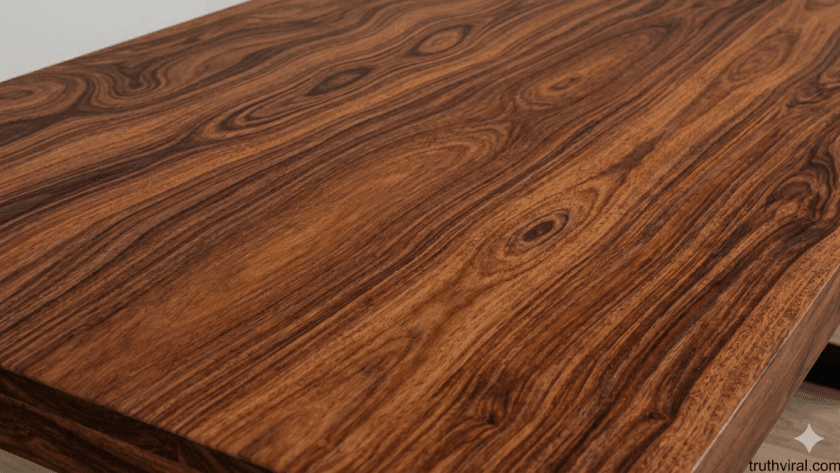
Sheesham wood also referred to in the form of Indian Rosewood, is one of the most sought-after woods used for flooring, furniture, carvings and other decorative objects. The wood is known for its durability, strength and intricate grain patterns Sheesham is a popular option for Indian families as well as traditional carpentry. But with the advent of cheaper alternatives and imitation woods, distinguishing the original Sheesham wood has become a major concern for prospective buyers.
If you’re looking to invest into Sheesham lumber or furniture, this is a comprehensive instruction to how to recognize Sheesham wood.
1. Color and Appearance
Sheesham wood is distinguished by its gold-to dark brown shade with natural, rich grain patterns. The heartwood tends to be darker, while sapwood tends to be lighter in the shade. The grains are usually in interlocking or straight patterns and give the wood a decorative appearance.
Fake or substitute woods can be polished or painted to resemble Sheesham however their color is usually too uniform, and does not have the natural depth of genuine Sheesham.
2. Grain and Texture
One of the most distinctive features that can be identified with Sheesham are it’s patterns of grain. It features distinct, wavy or straight grain patterns that appear natural and beautiful. The texture is coarse to medium and has a rough texture if left unpolished.
The cheaper alternatives such as mango wood or rubberwood have smoother, less obvious grains. On the other hand, engineered wood displays regular patterns that are not natural irregularities.
3. Weight and Density
Sheesham is an wood which is a bulky and heavy when compared to softwoods. If you try lifting the furniture made of Sheesham it will be heavier than similar-sized pieces comprised of teak, pine substitutes or plywood. Its weight is an indicator of strength and durability. It also has a long lifespan.
4. Durability and Termite Resistance
Sheesham wood is renowned because of the resistant to termites as well as decay and is popular for long-lasting furniture. If the wood appears thin, light or is prone to tiny cracks or holes there may be a problem with the authentic Sheesham. Genuine Sheesham feels solid and has a sturdy design and a reliable look.
5. Sound Test
An easy test to perform can be the testing for sound. Make a gentle tap on the surface of the wood. Sheesham creates an strong, deep sound and softwoods or engineered wood produce an unnatural and flat sound. This is an easy method to distinguish real wood from imitations.
6. Smell Test
Sheesham is the mild pleasant woody smell which can be detected fresh cleaned or polished. False woods typically do not have the smell, or could have an odor that is chemically similar to polishing with chemicals.
7. Resistance to Water
Sheesham wood doesn’t absorb water very quickly and thus helps keep it safe from damage caused by moisture. In the event that you spill a bit of water on a piece that is not polished the droplet will stay in the air for a time before it is absorption. The fake or less expensive alternatives often absorb water immediately.
8. Price and Authenticity
Original Sheesham is a bit higher priced than Acacia, mango wood or rubberwood. If you see furniture advertised with the designation “Sheesham” at a very affordable price, it’s not genuine. Make sure to purchase from reliable furniture showrooms or wood merchants who can provide more information on the kind of wood used.
Conclusion
Finding authentic Sheesham wood is by examining its color grain pattern along with its weight, durability, and the natural smell. Sheesham wood is extremely dense robust, durable, termite-resistant and features unique grain patterns that no substitute or synthetic wood is able to replicate.
When purchasing Sheesham furniture, make sure you purchase from reputable sellers and, if you can request evidence of the wood type. Genuine Sheesham might cost more, however its long-lasting durability and aesthetics make it an excellent purchase that will last for many generations.