Printed materials continue to play an important role in business communication. Business cards, product displays, signs and promotional materials help organisations present information and maintain a consistent visual identity.
However, customers increasingly expect quick access to digital information. Combining QR codes with professional printing provides a practical way to connect physical branding with online experiences.
What Is QR Code Printing?
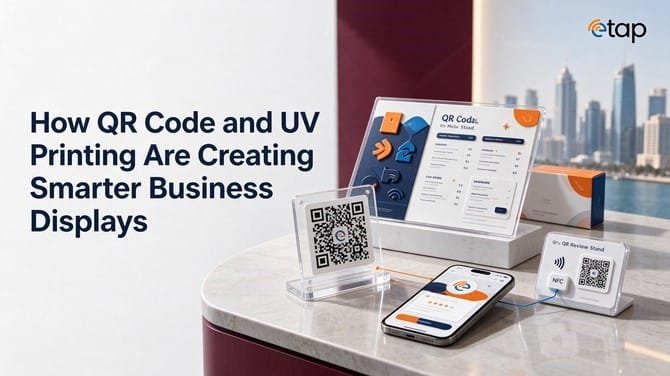
A QR code is a scannable, two-dimensional code that can direct users to an online destination. Depending on how it is configured, it may open a website, digital business card, online menu, contact page, product information or review page.
When printed on a physical item, the QR code allows customers to access that information using a compatible smartphone camera or QR scanning feature.
This makes it useful for businesses that want to provide additional information without filling a printed surface with long URLs or excessive text.
Understanding UV Printing
UV printing is a digital printing process that uses ultraviolet light to cure ink during printing. It can be used on different suitable surfaces, including acrylic, PVC, metal, wood, glass and plastic.
The process supports detailed designs, vibrant colours and customised branding. It can be useful when businesses want to print logos, graphics, text and QR codes directly onto products or display materials.
The final result depends on the selected material, surface preparation, print settings and intended application.
Where Can Businesses Use QR Code and UV Printing?
There are several practical applications:
- Business Cards
A QR code on a business card can direct recipients to a digital profile, portfolio or contact page.
- Restaurant Displays
Restaurants can place QR codes on table stands to provide access to digital menus. This can make menu updates easier when the linked online content is maintained separately.
- Retail Product Displays
Retailers can use QR codes to direct customers to product specifications, care instructions or additional information.
- Office Signage
Businesses can incorporate QR codes into suitable signs to provide access to directions, contact information or service details.
- Promotional Materials
Printed promotional products can connect physical campaigns with websites, landing pages and other online resources.
Why Design and Scan Quality Matter
A QR code must remain readable after printing. Businesses should use sufficient contrast, an appropriate code size and clear surrounding space. The code should also be tested on different compatible devices before the material is produced in larger quantities.
Branding should not compromise scanning reliability. Adding logos, colours or decorative elements requires careful testing to ensure the code continues to work.
Choosing a Printing Service
Before selecting a provider, consider the material, product size, intended environment, artwork requirements and QR code destination. Ask for a sample or proof when appropriate, and test the final printed code before distribution.
Businesses in Qatar exploring customised QR code printing on acrylic, PVC, metal, wood and other suitable materials can learn more about ETAP’s QR Code and UV Printing service.
Conclusion
QR codes and UV printing bring together physical presentation and digital convenience. Whether used on business cards, signage, product displays or promotional materials, they can help businesses communicate information in a more accessible and interactive way.